Puca : The Shapeshifting Spirit of Irish Folklore
Listen
At a glance
| Description | |
|---|---|
| Origin | Irish Mythology |
| Classification | Spirits |
| Family Members | N/A |
| Region | Ireland |
| Associated With | Shapeshifting, Trickery, Prophecy |
The Mythlok Perspective
In Mythlok’s perspective, the Puca is less a creature of mischief and more a personification of nature’s unstable balance. It reflects an older worldview where the land itself responds to human behavior, rewarding respect and punishing arrogance. The Puca is not moral in a human sense. It is elemental, seasonal, and instinctive. Unlike Loki from Norse tradition, who disrupts divine order, the Puca disrupts human certainty. It operates closer to the Slavic Leshy or the Japanese Kitsune, spirits who blur the line between guidance and deception. Across cultures, such figures remind us that the wilderness has consciousness and that control over nature is always an illusion.
Puca
Introduction
The Puca is one of the most enduring and mysterious spirits in Irish folklore. Neither fully benevolent nor entirely malevolent, the Puca represents the unpredictable side of nature and the unseen forces that linger at the edge of human settlements. Deeply rooted in rural Ireland, the Puca is most active during liminal times of the year, particularly around Samhain, when the veil between worlds is believed to thin.
Unlike a single named being, the Puca refers to a class of shapeshifting spirits scattered across the Irish countryside. These entities dwell near mountains, old ruins, lakes, and wild fields. Place names such as Pollaphuca, meaning “Puca’s Hole,” preserve its memory in the landscape. Over centuries, the Puca has come to symbolize the dual power of the natural world. It can guide, warn, and even reward humans, yet it can just as easily terrify, mislead, or disrupt daily life.
The word itself comes from the Irish “púca,” meaning spirit or ghost. Linguistic links connect it to the Welsh “pwca” and the English “Puck,” revealing a shared Celtic tradition of mischievous, shape-changing beings. However, the Irish Puca maintains a uniquely rural and elemental identity, closely tied to land and harvest cycles.
Physical Traits
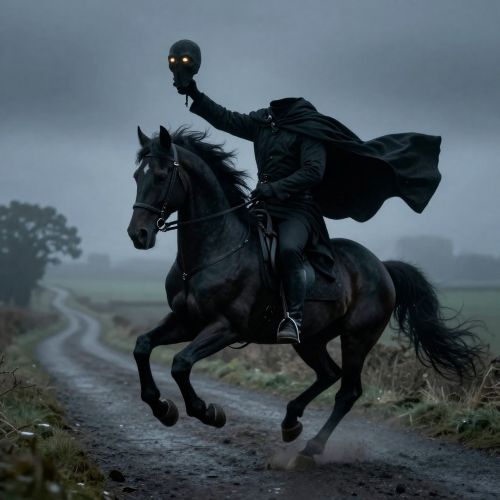
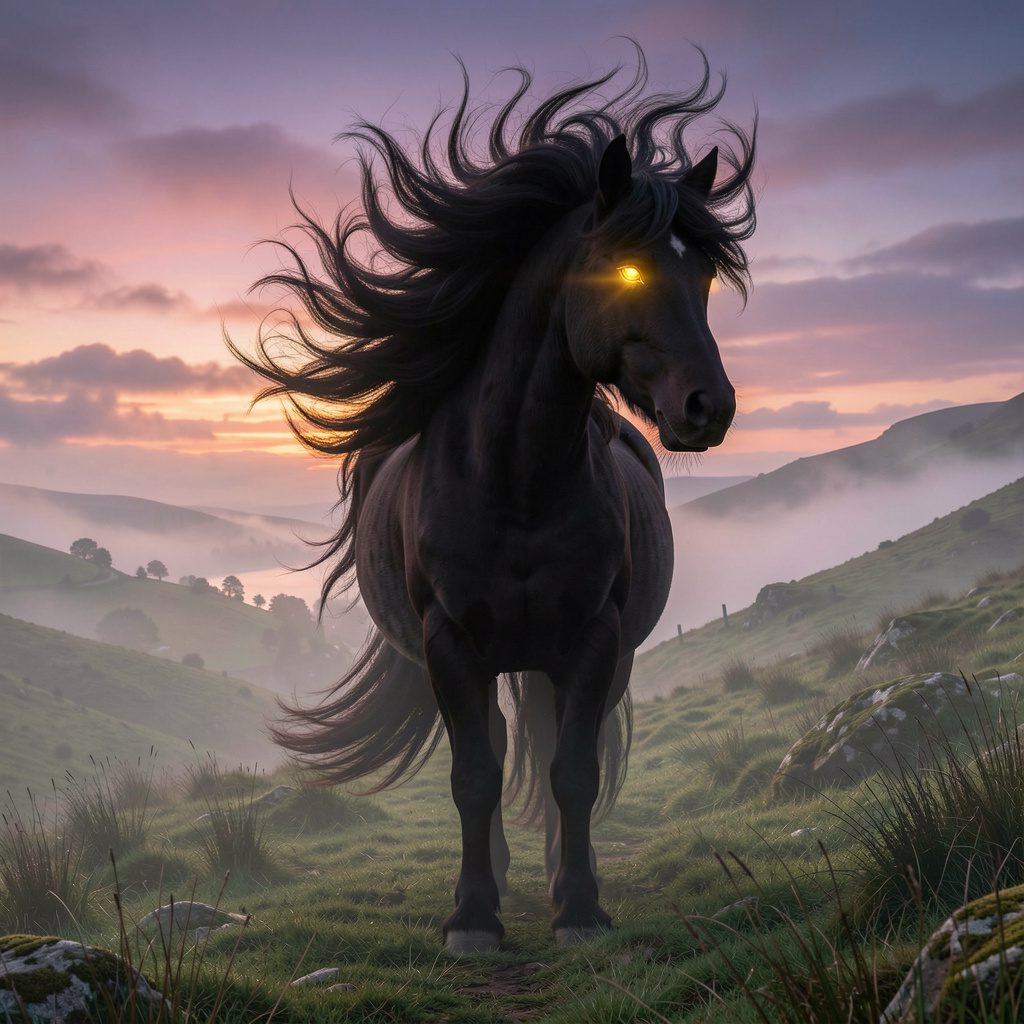
The defining characteristic of the Puca is its shapeshifting ability. It does not possess one fixed form. Instead, it appears in various animal shapes, most commonly as a black horse with glowing or golden eyes. In this form, it is often described as powerful and sleek, with an otherworldly presence that distinguishes it from an ordinary animal.
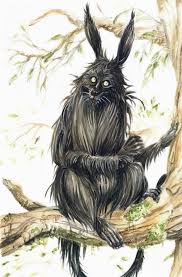
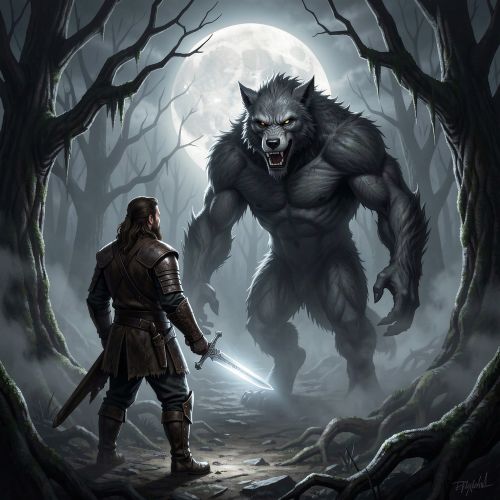
Beyond the horse, the Puca may appear as a goat, bull, dog, fox, wolf, hare, or even an eagle. In nearly every account, the creature’s coat or hair is dark, typically black. This detail reinforces its nocturnal and shadow-bound nature. Encounters often take place at dusk or in the deep hours of night.
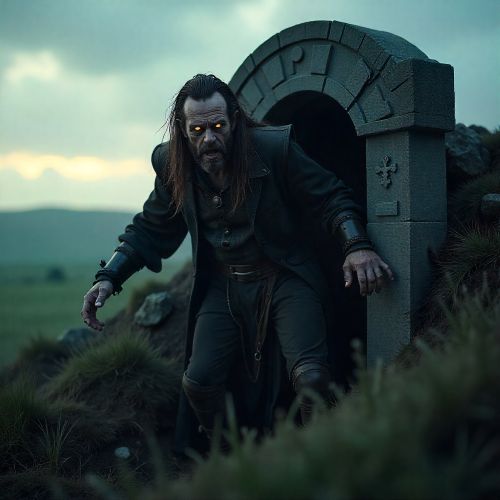
Some traditions describe the Puca taking on a human-like appearance while retaining animal traits, such as ears, hooves, or a tail. In rare stories, it manifests as a horned figure or a goat-headed being, blending faery and animal symbolism. Despite these variations, witnesses in folklore often sense something unmistakably uncanny about it. Even when it appears beautiful or majestic, there is always a trace of the Otherworld clinging to its form.
Family
The Puca does not belong to a defined divine lineage. Unlike the Tuatha Dé Danann, it has no recorded genealogy or mythic parentage. It is generally classified among the broader fairy host, sometimes associated with the Aos Sí, the supernatural beings of Irish tradition.
However, the Puca is typically portrayed as solitary. It does not operate as part of a structured court or clan. Instead, each Puca seems to act independently, guided by its own temperament. This independence reinforces its wild character. It is not bound by hierarchy or cosmic duty, but by instinct and mood.
Scholars have debated its origins. Some propose pre-Christian Celtic roots, while others note similarities with Norse folklore, particularly the Old Norse word “púki,” meaning imp or spirit. While definitive proof remains elusive, the Puca’s presence in medieval Irish storytelling suggests deep cultural integration long before later literary adaptations.
Other names
The Puca appears under several regional variations. In Irish, it is spelled púca. Anglicized forms include Pooka, Phouka, and Pookah. In Wales, the related spirit is called Pwca. In England, the name Puck became widely known, especially through literary adaptation.
One of the most famous literary echoes appears in A Midsummer Night’s Dream, where the character Puck embodies playful mischief and magical interference. Although Shakespeare’s version is more theatrical and lighthearted, the root concept of a shapeshifting trickster spirit remains recognizable.
In Irish tradition, however, the Puca retains a stronger connection to farmland and wilderness. The name itself may also connect to the Irish word “poc,” meaning he-goat, though scholars debate this link. Regardless of spelling, the identity of the Puca as a shape-changing rural spirit remains consistent.
Powers and Abilities
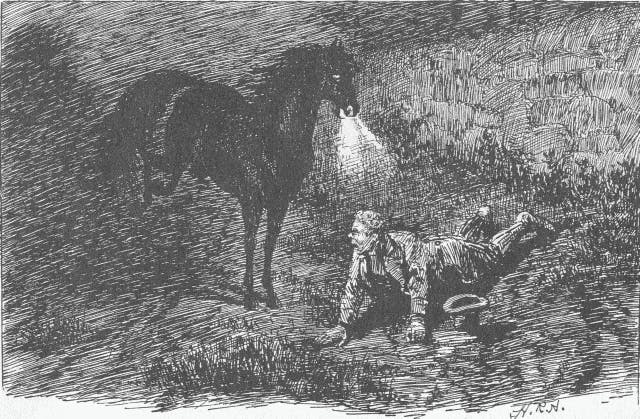
The Puca’s greatest power is transformation. It can shift between animal and human forms effortlessly. In many tales, it appears as a horse and invites an unsuspecting traveler to ride. Once mounted, the rider experiences a wild and terrifying journey across hills, bogs, and cliffs before being thrown off at dawn, usually shaken but unharmed.
Despite its frightening pranks, folklore rarely records the Puca causing lasting physical harm. Instead, it humiliates, disorients, or frightens. It particularly targets drunk or arrogant individuals, reinforcing moral undertones within rural storytelling.
The Puca is also capable of speech. It may offer cryptic warnings, prophecies, or riddling advice. In harvest lore, farmers sometimes left a portion of crops unharvested, known as the Puca’s share, to ensure goodwill. When respected, the spirit could protect livestock or bring agricultural fortune. When ignored, it might spoil milk or trample fields.
This dual nature reflects its symbolic role. The Puca embodies the unpredictable spirit of the land itself. Nature can nurture or destroy. The Puca mirrors that balance.
Modern Day Influence
The Puca continues to appear in modern literature, film, and popular culture. In 1944, the Broadway play Harvey introduced a giant invisible rabbit described as a pooka, later adapted into a 1950 film. Decades later, the film Donnie Darko presented a darker, unsettling rabbit figure often interpreted as a Puca-like entity guiding the protagonist through chaos.
Irish literary revivalists such as W. B. Yeats collected stories about the Puca, preserving its folklore legacy. Contemporary festivals in Ireland, especially Halloween celebrations, draw inspiration from its Samhain associations. The modern Púca Festival in County Meath celebrates myth, music, and storytelling rooted in this tradition.
Today, the Puca remains a symbol of Ireland’s untamed imagination. It appears in role-playing games, fantasy novels, and artwork. Bronze statues and tourism initiatives continue to reintroduce the spirit to new generations.
The endurance of the Puca lies in its adaptability. It shifts forms across centuries just as easily as it shifts shape within a single night.
Related Images
Source
Irish Central. (2024, January 11). The Irish legend of the Pooka. IrishCentral.
https://www.irishcentral.com/roots/history/irish-legend-pooka
AncientPages. (2016, June 3). Pooka: Solitary spirit and not entirely benevolent prankster in Irish folklore. AncientPages.com. https://www.ancientpages.com/2016/06/04/pooka-mythical-and-not-entirely-benevolent-prankster-in-irish-folklore/
Irish Culture & Traditions. (2025, August 11). Puca – The shape‑shifting spirit of Celtic folklore. IrishCultureAndTraditions.org. https://irishcultureandtraditions.org/2025/08/11/puca-the-shape-shifting-spirit-of-celtic-folklore/
The Irish Place. (2020, February 15). Ireland’s trickiest faery – The Pooka. TheIrishPlace.com.
https://www.theirishplace.com/heritage/irish-myths-and-legends/irelands-trickiest-faery-the-pooka/
Yeats, W. B. (Ed.). (1888). Fairy and folk tales of the Irish peasantry. John Lane / The Bodley Head.
http://www.ricorso.net/rx/library/authors/classic/Yeats_WB/prose/Fairy_Tales/05_Pookas.htm
IrishMyths.com. (2022, October 1). Púca origins: How a mischievous little monster infiltrated Irish folklore. IrishMyths.com. https://irishmyths.com/2022/09/30/puca/
Wilderness Ireland. (2022, October 24). Irish folklore: The Púca. WildernessIreland.com. https://www.wildernessireland.com/blog/irish-folklore-puca/
Wikipedia. (2023). Púca. In English Wikipedia. Wikimedia Foundation.
https://en.wikipedia.org/wiki/P%C3%BAca
Frequently Asked Questions
What is a Puca in Irish folklore?
A Puca is a shapeshifting spirit from Irish folklore known for its mischievous behavior, rural associations, and ability to appear as animals such as horses or goats.
Is the Puca good or evil?
The Puca is neither purely good nor evil. It is an ambivalent spirit that can bless or frighten humans depending on circumstances and behavior.
What animals does the Puca turn into?
The Puca most commonly appears as a black horse but can also take the form of goats, dogs, foxes, bulls, hares, or birds.
Is Puck from Shakespeare related to the Puca?
Yes, Shakespeare’s Puck shares linguistic and folkloric roots with the Irish Puca, though the literary version is more playful and less rural in character.
Is the Puca connected to Halloween?
Yes. The Puca is strongly associated with Samhain, the ancient Irish festival marking the end of harvest, which later influenced Halloween traditions.